About Granite surface plate grade 0
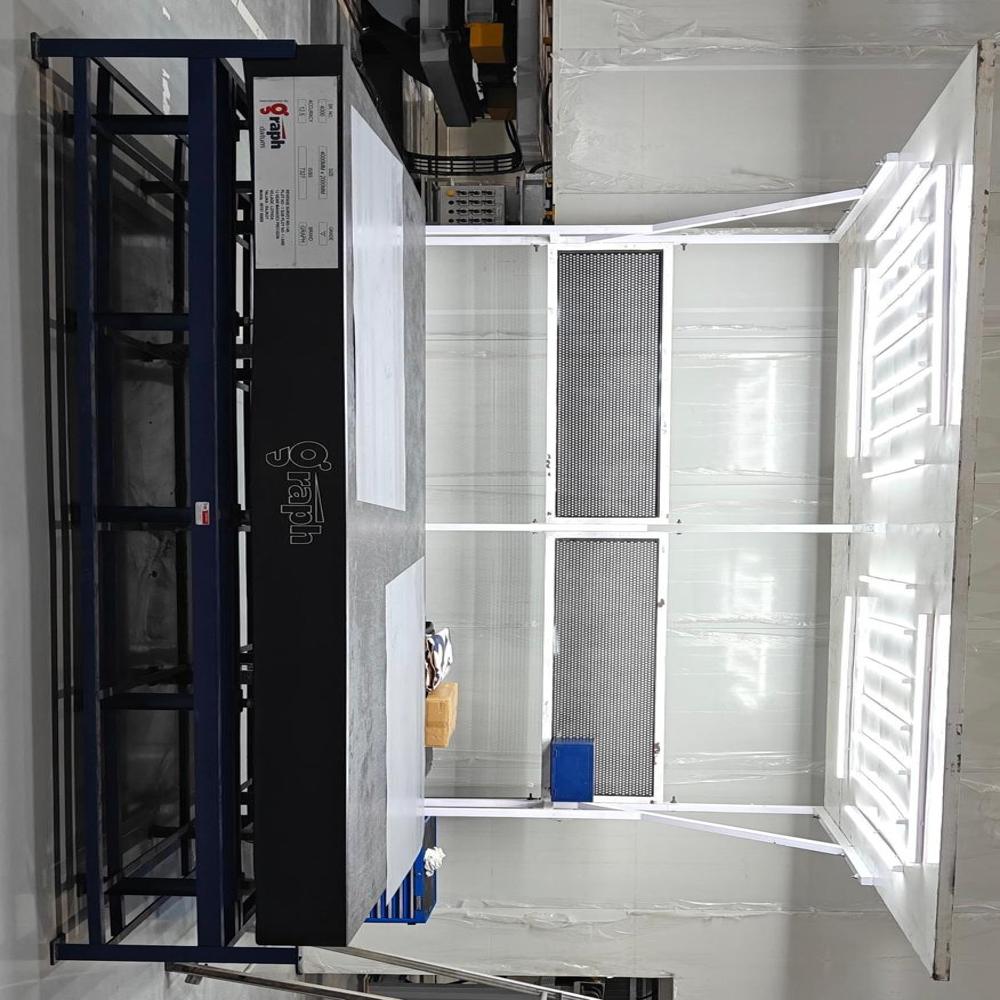
Constructed from high-quality granite, often black granite granite, chosen for its hardness, density, and stability.Provides an extremely flat and stable reference surface essential for precision measurements and inspections.Technical Details
FAQs of Surface Plate Granite:
Q: What material is the Surface Plate Granite made of?
A: The Surface Plate Granite is made of high-quality granite.
Q: What is the weight of the Surface Plate Granite?
A: The Surface Plate Granite weighs 120 kilograms (kg).
Q: What is the application of the Surface Plate Granite?
A: The Surface Plate Granite is designed for laboratory use.
Q: What type of hardness does the Surface Plate Granite have?
A: The Surface Plate Granite is categorized as hard.
Q: What is the color of the Surface Plate Granite?
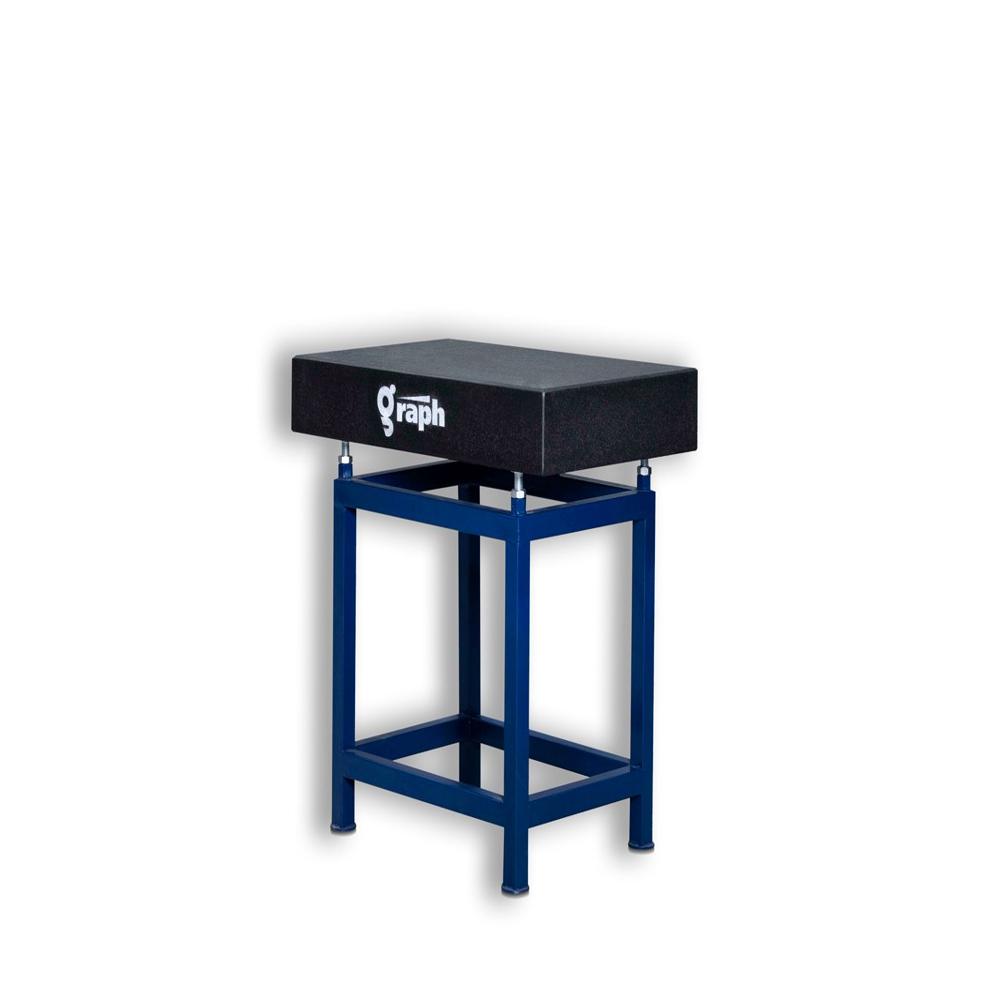
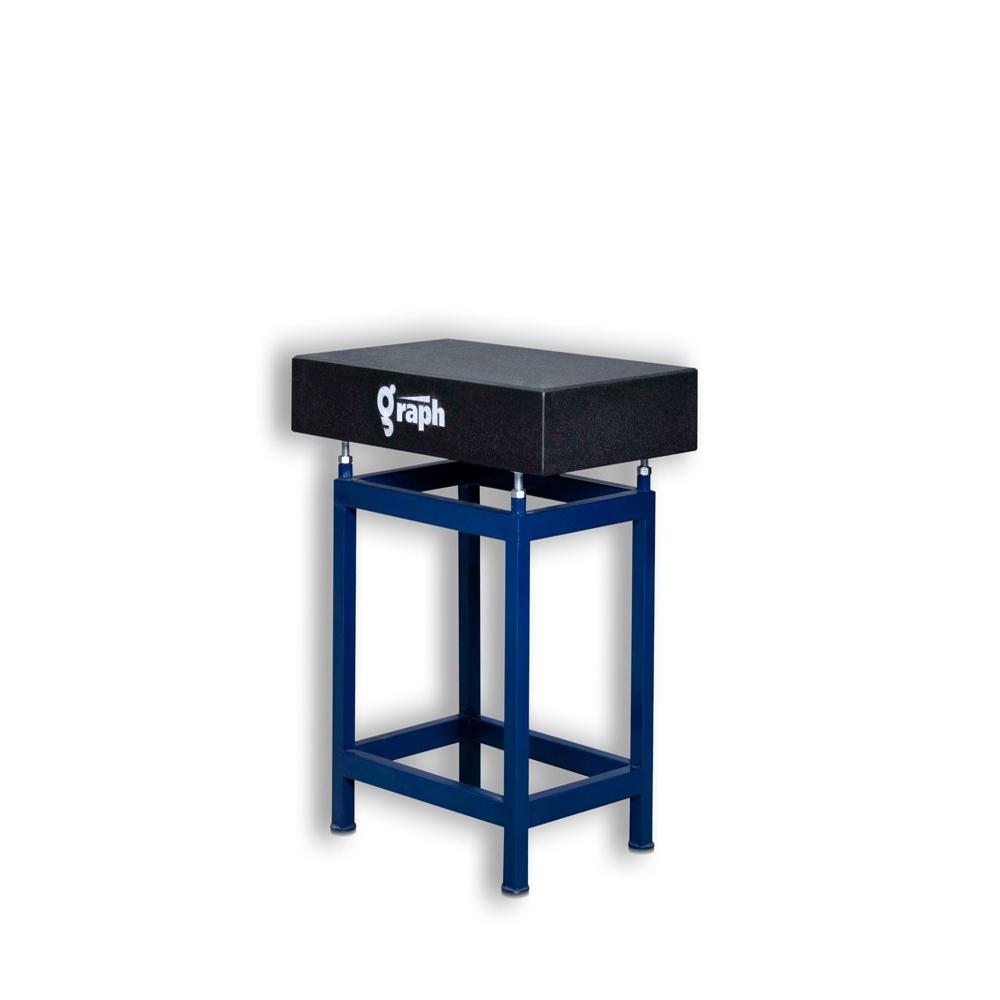
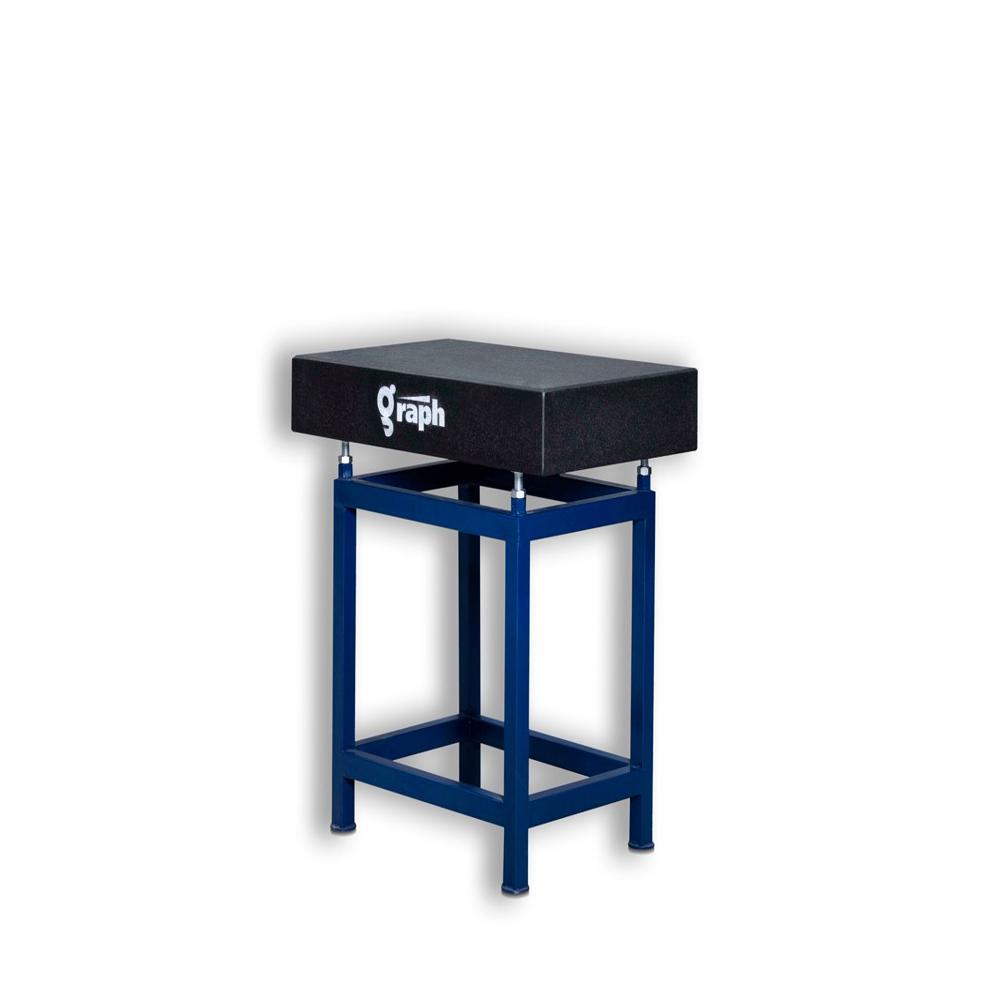
A: The Surface Plate Granite comes in a blue color.
Q: Is the Surface Plate Granite suitable for industrial usage?
A: Yes, the Surface Plate Granite is designed for industrial usage.
Q: What is the machine weight for this product?
A: The machine weight for the Surface Plate Granite is 250 kilograms (kg).
Unmatched Flatness & AccuracyOur granite surface plates are lapped and finished to achieve flatness tolerances of up to 3 microns per meter (Grade 00), making them ideal for high-precision applications. Each plate is supplied with a lapping certification and test certificate, ensuring accuracy and reliability in measurement and inspection tasks.
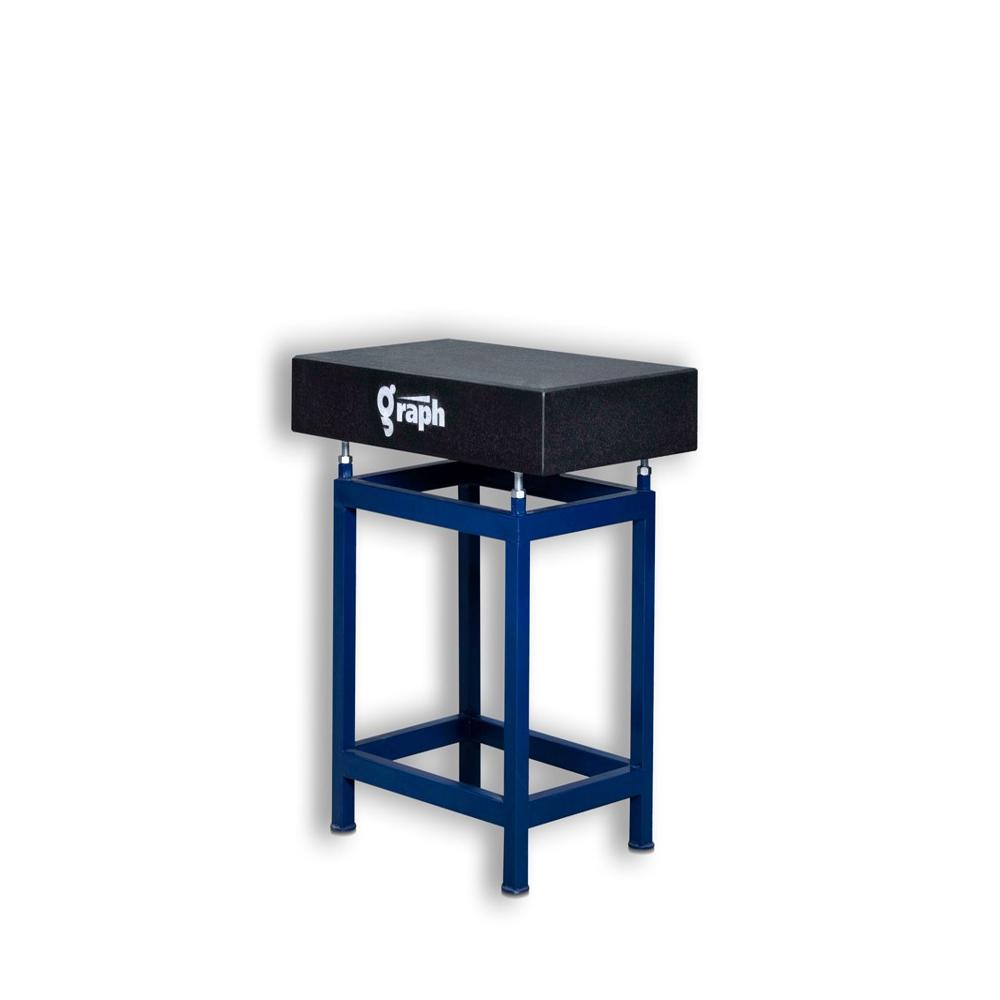
Customizable for VersatilityAvailable in both rectangular and square shapes, plates can be tailored in size, thickness (from 300 mm to 800 mm), and equipped with optional T-slots or leveling stands. This flexibility allows seamless integration into laboratories, tool rooms, and manufacturing environments, accommodating specific measurement ranges up to 6000 mm x 2000 mm.
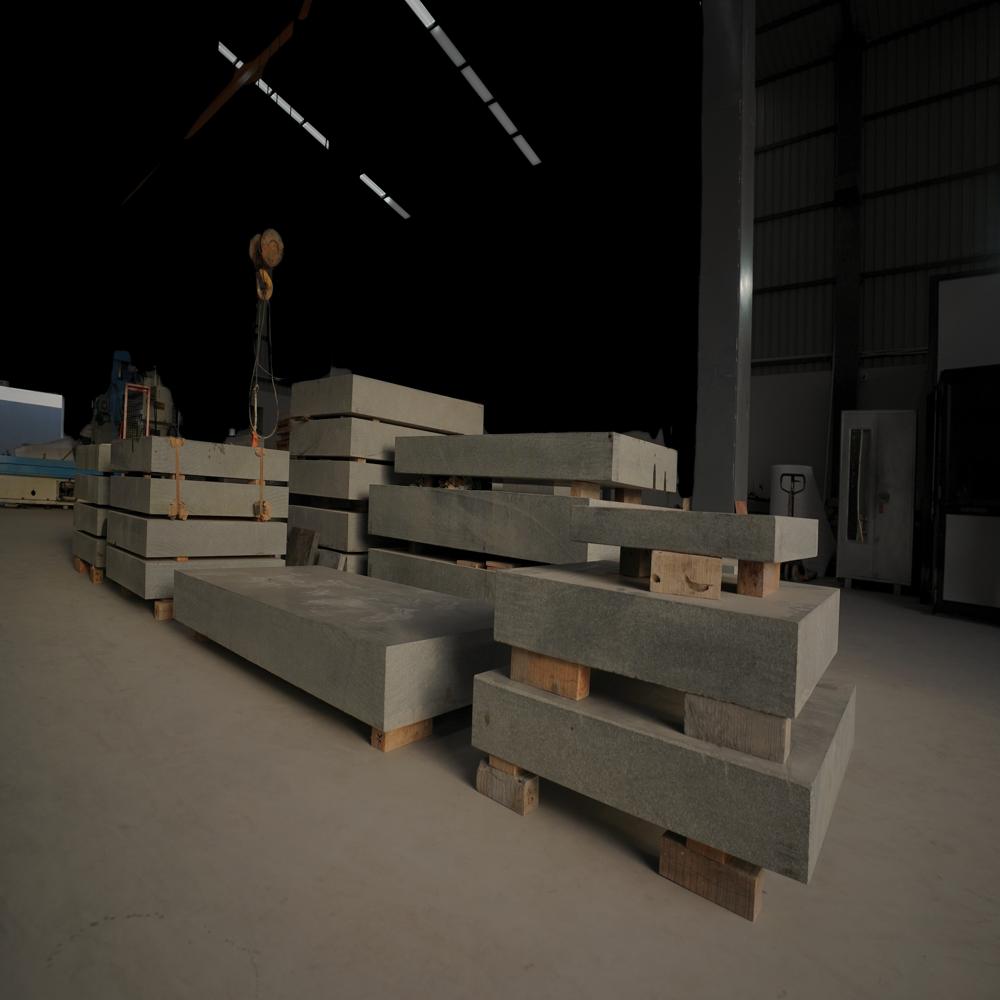
Durability for Demanding EnvironmentsMade from high-density, non-corrosive black granite, these plates are thermally stable, rust-proof, and highly wear-resistant. Edge chamfering enhances safety, while robust wooden crate packaging ensures secure transport. Their superior build quality supports load capacities up to 20 tons and ensures long-term stability in industrial or lab settings.
FAQ's of Granite Surface Plate:
Q: How is the granite surface plate used in precision measurement and inspection?
A: Granite surface plates provide a high-flatness reference base for positioning, calibration, and inspection of tools, gauges, and components. Their stability and accuracy make them essential in precision measurement in industrial, laboratory, and tool room settings.
Q: What grade options are available, and which grade should I choose for my application?
A: The plates are offered in Grade 00 (laboratory use), Grade 0 (inspection), Grade 1, and Grade 2, each adhering to IS:7327-2003 / DIN 876. Choose Grade 00 for maximum flatness in laboratories, or select Grades 0-2 based on your required inspection or workshop tolerance levels.
Q: When should I opt for custom sizes or features like T-slots or leveling stands?
A: Custom sizes, T-slots, and leveling stands are recommended when standard plates do not fit operational requirements or when specific mounting and workpiece securing needs arise. These features can be requested as per your specifications to optimize workspace and workflow.
Q: Where can granite surface plates be installed, and how are they mounted?
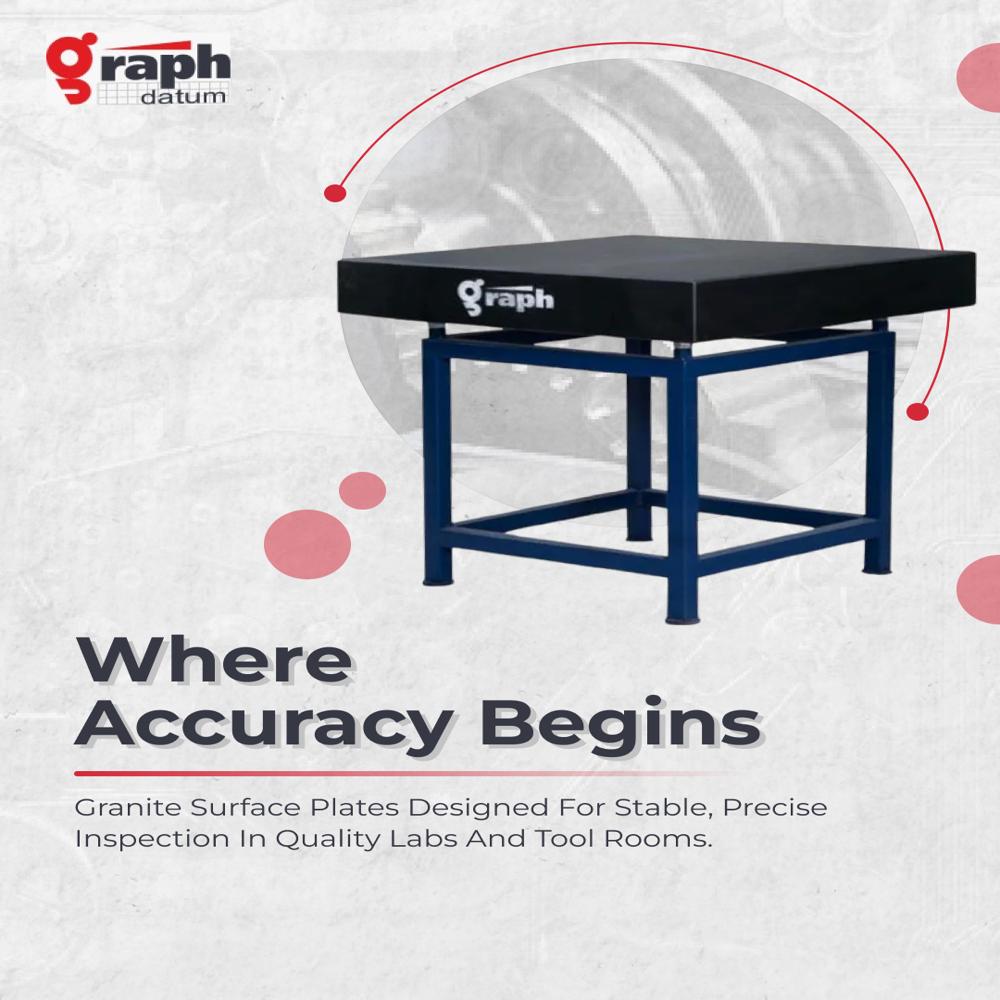
A: Granite surface plates can be installed in laboratories, tool rooms, workshops, or inspection areas. They can be floor-mounted directly or used with an optional leveling stand, which aids in achieving perfect horizontal alignment, improving measurement accuracy.
Q: What is the process to ensure flatness and quality of the plate?
A: Every plate undergoes precise lapping and finishing to achieve high flatness. Each piece is individually tested in accordance with IS:7327-2003 standards, and a test certificate is supplied, guaranteeing the stated flatness tolerance and quality performance.
Q: How does the granite construction benefit measurement accuracy over time?
A: Black granite's high density, hardness (minimum 70 HRC), and low thermal expansion (5.5 x 10⁶ /C) provide long-term dimensional stability and resistance to warping, scratching, and corrosion, ensuring reliable accuracy in various environmental conditions.
Q: Can the plate withstand heavy industrial loads and harsh conditions?
A: Yes, these plates are designed to handle loads up to 20 tons, with superior wear resistance and rust-proof properties. They perform consistently across a broad temperature (0-45C) and humidity (0-85%) range, making them suitable for demanding industrial settings.
Exceptional Precision and DurabilityConstructed from high-density black granite, this surface plate guarantees remarkable flatness, wear resistance, and dimensional stability. Its Grade 0 accuracy, as defined by IS:7327-2003 and DIN 876, enables highly reliable inspections and measurement results, even in demanding workshop settings. The combination of a finely lapped, non-porous surface and machine chamfered edges improves precision and safety during usage.
Versatile Applications Across IndustriesThis granite surface plate is essential for precision inspection, layout, marking, and tooling setup in both industrial workshops and research laboratories. Its compatibility with a wide measuring range and adjustable stand makes it suitable for many types of measuring and calibration equipment, delivering robust support for quality assurance processes and metrology tasks.
Low Maintenance and Extended Service LifeThanks to its non-corrosive properties and exceptional hardness (Mohs scale 6-7), the plate is highly resistant to scratches and deformation. Regular cleaning and proper handling ensure a long operating life, with the advantage of a supplied calibration certificate affirming its accuracy. Optional covers extend protection, preserving the plate's fine surface between uses.
FAQ's of Granite surface plate grade 0:
Q: How should I maintain a granite surface plate to ensure long service life?
A: To maximize the service life of your granite surface plate, clean the surface regularly with a suitable cleaner free from abrasive elements. Install covers when not in use to prevent dust accumulation. Handle with care to avoid impacts, and calibrate periodically according to IS:7327-2003 or DIN 876 standards to ensure consistent accuracy.
Q: What makes a Grade 0 granite surface plate suitable for precision work?
A: Grade 0 granite surface plates adhere to stringent flatness tolerances (e.g., 3-9 microns per meter depending on size) as per IS:7327-2003 and DIN 876. The fine lapped surface, high density, and exceptional stability ensure minimal deviation, making it ideal for the most demanding inspection and calibration tasks.
Q: When should I choose a granite surface plate over a cast iron plate?
A: Opt for a granite surface plate when you require non-magnetic, corrosion-resistant properties alongside high wear resistance and thermal stability. Granite ensures greater dimensional accuracy over time, with less susceptibility to rust and deformation compared to cast iron, especially in environments where calibration precision is critical.
Q: Where can these granite surface plates be utilized?
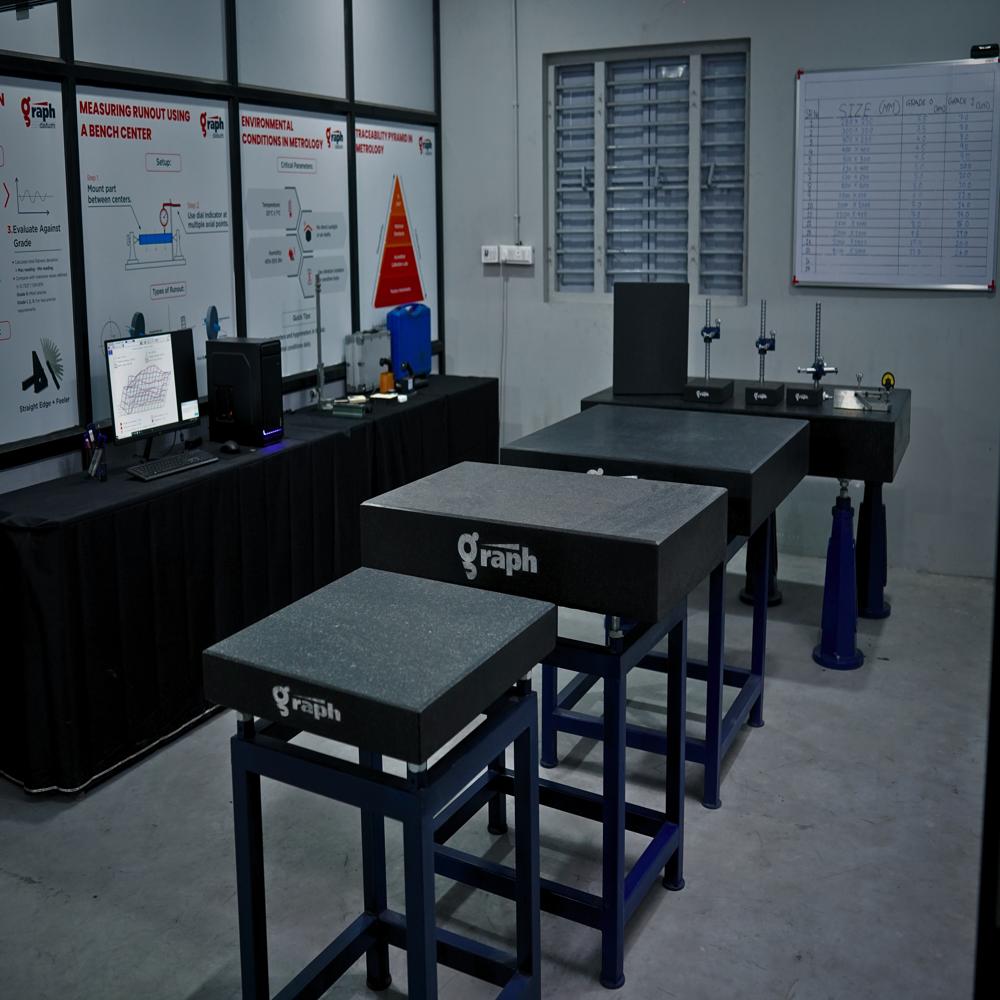
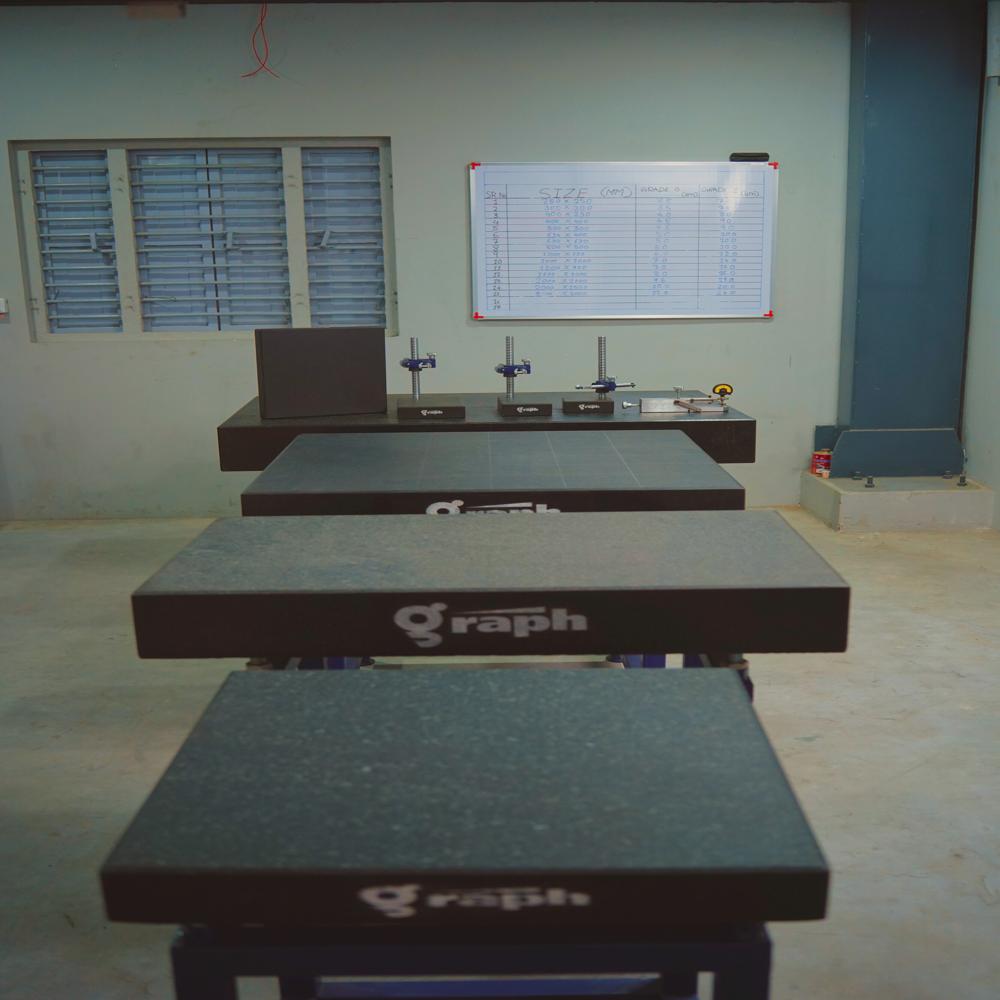
A: These plates are widely used in quality control laboratories, tool rooms, workshops, and research facilities across manufacturing sectors. They serve as a stable reference base for inspection, layout, marking, and equipment setup, enabling precise measurements and calibrations.
Q: What process is involved in calibrating a granite surface plate?
A: Calibration involves using precision instruments to check flatness and surface integrity according to IS or DIN standards. A certified technician inspects the surface plate, notes deviations, and issues a calibration certificate. Regular calibration ensures continued adherence to Grade 0 precision requirements.
Q: How does the non-magnetic and corrosion-resistant nature of black granite benefit users?
A: The non-magnetic and corrosion-resistant properties of black granite prevent interference with magnetic tools or sensitive measurements and ensure the plate maintains integrity in humid or challenging environments. This translates to reliable, maintenance-friendly operation over many years without risk of rust or surface degradation.






 Send Inquiry


 Send Inquiry